

There is so much happening on the African continent that as a poet or writer who loves to write about Africa, would require multiple heads just to keep track. Sudan is on the brink of civil war, Cameroon is suffering unrest in its English regions, and multiple protests for better governance in Kenya have led to the deaths of protestors and innocent bystanders. To my utter surprise, not many people were aware of some of these events that were ongoing whenever I mentioned it in a conversation. I was not surprised, killings and conflicts in Africa are a tale as old as time. Yet, there is a need for the world to hear about these conflicts and protests, so that the world can stand with the afflicted and put pressure on the right institutions to do the right thing.
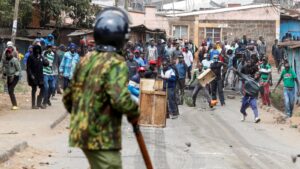
So, what inspired me to write my new poem ‘Nairobi’? ‘Nairobi’ is a free-verse poem spluttered with iambs. The inspiration came from the need to let people know what was happening in an African state, Kenya, where citizens were commemorating the country’s ‘SABA-SABA’ march which brought it back into democracy in the 90’s while also protesting against police brutality and better governance, were subjected to more brutality with about thirty-one dead and the world wasn’t talking about it enough.
When writing poems like ‘Nairobi’ which essentially seeks to inform, it’s important that you get your facts right. There are periods when a poet doesn’t need to do any research and there are others when an extensive reading and research is required. In my research, I read multiple news articles from The New York Times, BBC, and YouTube videos captured by news sites such as DW for two main reasons. The first reason was to obviously keep myself informed and understand the rhetorical situation, and the second was to assist in performing visual rhetoric. A visual rhetoric is simply analysis of image and other visuals. In other words, I needed an image, as poetry often springs from one of two things, an image or feeling.
Then, after getting properly informed, I established my rhetorical situation (exigence + audience + purpose). I could not stress enough the need for writers to establish a rhetorical situation before they begin to write. Also, I made sure I captured a lot more of the context in writing with the use of Wh-words (What? Where? When?). It is a good pre-writing activity.
Some of the themes explored in this poem are conflict, suffering, unemployment and many other social issues. In other to communicate all of them, I spent a lot of days creating metaphors that would capture the situation as fittingly as possible. The poem used a collective/personal Point of View (I, Our), although I did not experience any of the incidents in it. It is only to say I share in my brother’s struggle, and until my brother is free, I am not.
In revising and editing this poem, I did cut away a few extra words. I believe a poem is not really done till you take a fresh look weeks later, so there could be more revision ahead. Finally, to measure my main objective, which is to inform, I sent my draft out to friends and peers for feedback and importantly, asked if they felt INFORMED. AND THEY DID!
Photo credit: news.sky.com